Eye Bag Removal in Korea: Lower Blepharoplasty vs Fat Repositioning, Recovery and How Long to Stay

A practical guide to eye bag removal in Seoul for foreign patients: the difference between under-eye fat repositioning and lower blepharoplasty, which incision suits which eyes, what recovery looks like, how long to stay, and the questions to ask at your consultation.

How does eye bag removal work in Korea? In Seoul, eye bag removal usually means one of two operations: under-eye fat repositioning (눈밑지방재배치), where bulging fat is moved down into the hollow below it through a cut inside the lower eyelid, or lower blepharoplasty (하안검), which also trims loose skin through a cut just under the lashes. Which one you need depends mainly on your skin. Most foreign patients planning eye bag removal in Korea stay about 7 to 10 days.
We're medical interpreters (Korean with English, Japanese, Chinese, Russian and Indonesian) and a registered foreign patient facilitator in Seoul (no. A-2026-08-02-07352). We sit in on eye bag consultations with patients from abroad, and the same few questions come up every time. This guide covers them. Medical details here are general guidance; your surgeon decides what suits your eyes.
The details of the erbium-laser method, the recovery timeline and the risks below come from QD Clinic in Gangnam, shared with the clinic's permission.
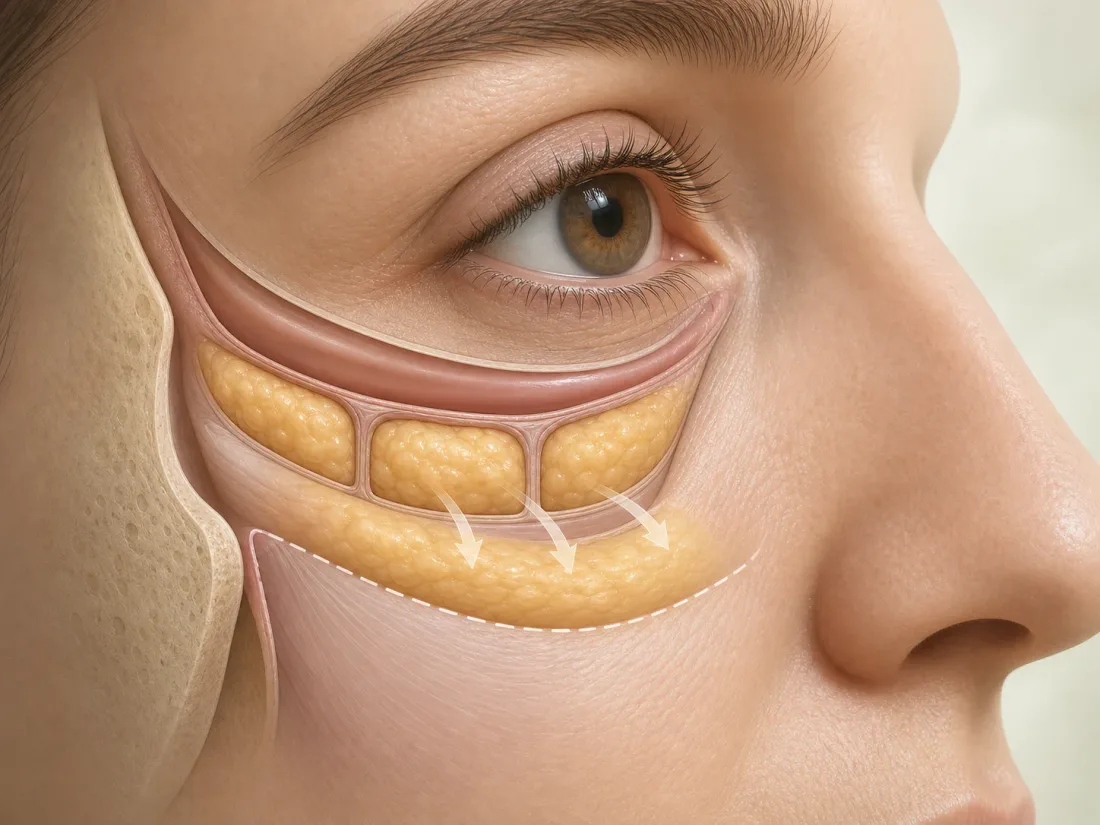
What is the difference between fat repositioning and lower blepharoplasty?
Fat repositioning deals with fat: it smooths a bulge and fills the groove under it. Lower blepharoplasty deals with fat and skin: it also removes extra, crepey skin. Korean consultations often present them as two separate menu items, so it helps to know the Korean names.
- Under-eye fat repositioning (눈밑지방재배치, nunmit jibang jaebaechi): done through the inside of the lower lid (transconjunctival), so there's no visible scar. The fat is moved, not only removed, to soften the tear trough. Often chosen by people in their 20s to 40s whose skin is still firm.
- Lower blepharoplasty (하안검, ha-angeom): an incision just below the lash line (subciliary) lets the surgeon remove or reposition fat and trim loose skin. Often chosen when there are fine wrinkles or skin that hangs over the bulge.
- Fat removal only: some clinics still offer simple fat removal through the inner lid. Taking out too much fat can leave the area looking hollow, so ask what will happen to the fat.
- Non-surgical options: fillers, skin boosters or energy devices may help mild puffiness or dark circles, but they don't move fat. See skin boosters in Korea.
How does erbium-laser fat repositioning work?
Some Seoul clinics, including QD Clinic, do fat repositioning with an erbium laser instead of a blade. The operation goes like this:
- The surgeon works through the inside of the lower eyelid (transconjunctival), so there's no cut on the skin and no stitches to remove.
- The laser opens a fine path and releases the fat pockets.
- The released fat is moved down over the bony rim of the eye socket into the tear trough and secured, so the line between lid and cheek is smooth. Depending on your anatomy, a small amount of fat may also be removed.
- It's done under local anaesthesia, with light sedation if needed, and takes about 30 to 60 minutes. You usually go home the same day.
Which one do I need: an incision inside the eyelid or under the lashes?
If your main problem is a bulge and your skin snaps back when you pinch it, an inside-the-lid approach is often enough. If you have loose, wrinkled skin as well, the surgeon may recommend an under-the-lash incision or a combined plan.
| Fat repositioning (inside the lid) | Lower blepharoplasty | Under-eye filler | |
|---|---|---|---|
| Incision | Inside the lower lid, none on the skin | Just below the lashes | None (injection) |
| What it does | Moves your own fat into the hollow | Moves or removes fat and trims loose skin | Adds volume to the hollow; absorbed over time |
| Loose skin | Best with little loose skin | Also treats loose or wrinkled skin | Not treated |
| Recovery | Swelling and bruising for several days to about 2 weeks | Stitches out at about 5–7 days; bruising for 1–2 weeks | Little to none |
Fat repositioning through the inside of the lid usually suits:
- Bags under the eyes with a hollow (tear trough) below them
- Puffiness that makes you look tired even after a good night's sleep
- Firm skin with little loose skin, which is why younger patients often choose it
If you have a lot of loose lower-lid skin, a lower blepharoplasty may suit you better. The surgeon decides at the consultation.
In consultations, Korean surgeons usually check three things: how much the fat bulges, how deep the groove (tear trough) below it is, and how loose the skin and lower lid are. Ask the surgeon to show you in a mirror which of these they're treating. Dark circles caused by pigment or thin skin won't go away with surgery alone, and a good surgeon will tell you that up front.
Is under-eye fat repositioning permanent?
The fat that's been moved doesn't grow back. But if you put on a lot of weight, or as the skin and supporting tissue weaken with age, the area can look fuller again over the years. The operation doesn't stop ageing, and a good surgeon will tell you that up front.
Ask your surgeon what they expect for your age and skin type, and what a touch-up would involve if you need one later. If you've already had eye bag surgery and want it corrected, read eye revision surgery in Korea.
What is recovery like after eye bag surgery?
Bruising usually fades over 1 to 2 weeks, and most of the swelling you can see settles within 2 weeks. Deeper swelling takes 1 to 3 months to go, and the final result can only be judged after about a year, so try not to judge it in the first few weeks. Most people look presentable 1 to 2 weeks after eye bag surgery in Korea.
- Day 0: the operation is often done under local anaesthesia with sedation, and you go home the same day. Bring sunglasses.
- Days 1–3: peak swelling and bruising. Cold compresses as the clinic tells you, head raised, no strenuous activity and no rubbing.
- Around days 5–7: stitches out for under-the-lash incisions. With inside-the-lid surgery there may be no stitches to remove, or a quick check instead.
- Weeks 1–2: bruising fades. Many people go back to desk work, often with concealer once the surgeon allows make-up.
- Months 1–3: the deeper swelling settles and the line between lid and cheek falls into place. Small changes can continue for up to a year.
For a wider picture of how swelling changes day by day, see our swelling timeline. Call the clinic straight away if you have severe pain, sudden swelling on one side, or any change in your vision.
What are the risks of eye bag surgery?
Most people heal without problems, but every operation carries risks. The ones surgeons usually discuss for lower eyelid surgery are listed below; this is general information, so ask your surgeon how likely each one is for you.
- Lower lid pulling down (ectropion or scleral show): more of a concern with under-the-lash incisions and loose lower lids. Ask whether lid support (canthopexy) is planned.
- Hollowness: if too much fat is removed, the area can look sunken. This is why many Korean surgeons prefer repositioning.
- Asymmetry or a remaining bulge: small differences are common while swelling settles; ask when a check or touch-up would be considered.
- Dry or irritated eyes: usually temporary. Ask which eye drops to use and when you can wear contact lenses again.
- Numbness or tightness: in the treated area; settles over time.
- Lid position changes or difficulty closing the eyes: uncommon, but ask how the surgeon would handle it.
- Urgent signs: a sudden change in vision, severe eye pain or swelling that gets rapidly worse. Contact the clinic or emergency care at once.
Tell the surgeon before the operation if you have dry eye disease or have had eye surgery before, take blood thinners or have a bleeding disorder, are pregnant or breastfeeding, or tend to scar badly (keloids).
How long should I stay in Korea for eye bag removal?
Plan on about 7 to 10 days for eye bag surgery on its own, and longer if you combine it with other procedures. Arrive a day before your consultation and stay until your stitches are out or the clinic has done its follow-up check.
- Day 1: arrive and rest. Day 2: consultation(s). Day 3 or later: surgery, if you're ready to decide.
- Stay until the clinic has done its last planned check-up and your surgeon says you can fly.
- If you're combining it with double eyelid surgery or a facelift, ask the clinic how many extra days that adds.
- Book a changeable return flight in case your surgeon wants one more check.
- Before you leave, get your operation notes, medication list and aftercare instructions in English.
What should I ask at an eye bag consultation in Seoul?
Ask who will operate, which approach they recommend and why, and what happens to the fat. Get the plan in writing before you pay a deposit.
- Will you reposition the fat, remove it, or both?
- Will the incision be inside the eyelid or under the lashes? Why that one for me?
- Do you need to tighten the lower lid or the outer corner as well?
- Who is the operating surgeon, and are they a board-certified plastic surgeon (성형외과 전문의)? (See how to check a Korean surgeon's certification.)
- What anaesthesia will you use, and how long does the operation take?
- When are the stitches out and the follow-up checks, and when can I fly?
- What does the quote include (medication, check-ups, revision policy)?
- If I'm not happy with the result, what are my options and how long should I wait?
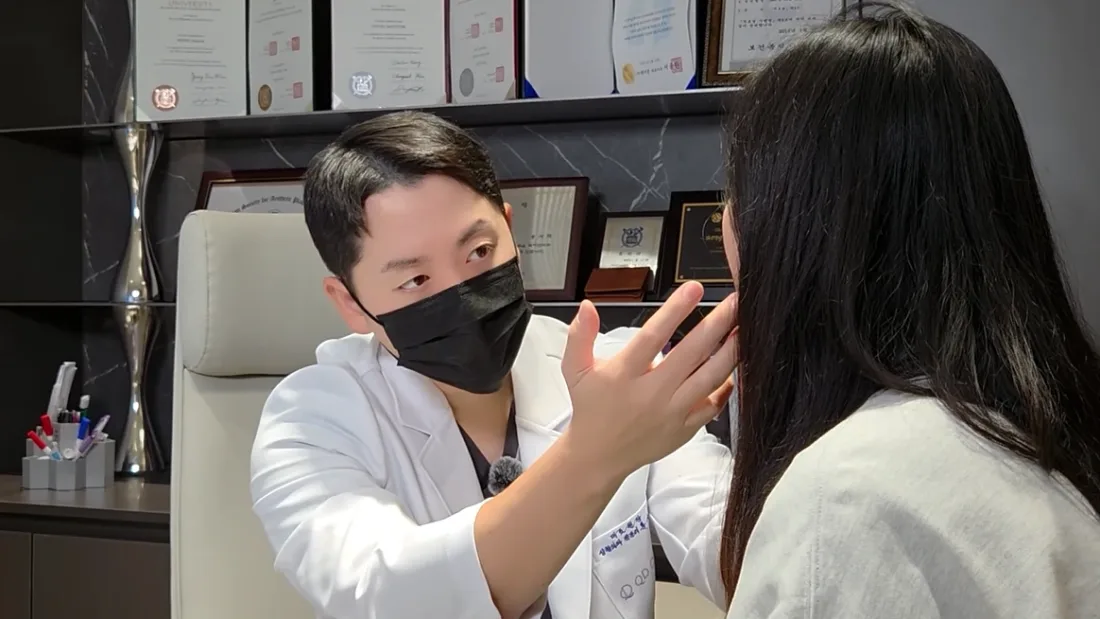
Consent forms and aftercare sheets are often in Korean. That's where a word-for-word interpreter matters most, more than in small talk at the front desk.
Is it worth going to Korea for eye bag removal?
For many patients, yes: lower blepharoplasty in Korea is a common operation, many surgeons focus on eyes, and the trip is short. It's a good fit if you can stay 7 to 10 days and are willing to compare consultations. It may not suit you if you can only come for a long weekend.
Check the surgeon, avoid deals that push you to pay before a proper consultation, and read our guide on red flags when choosing a Seoul clinic.
Who can help me book eye bag surgery in Seoul?
You can contact clinics directly, go through a medical tourism agency or registered facilitator, or hire an independent interpreter. SeoulBeautyTalk is a registered foreign patient facilitator in Seoul (no. A-2026-08-02-07352) offering a free medical tourism concierge; once surgery is booked, the interpreter, prescription medication, pumpkin juice, a recovery pillow and (depending on the surgery) airport transfers are included.
How we can help
Start with our free medical tourism concierge. We match you with registered clinics that do eye bag surgery, book consultations in Korean (video consultations too, before you fly), help you plan dates and your recovery stay, and check in during aftercare once you're home. Clinics pay us a facilitator fee, so the concierge costs you nothing.
Once your surgery is booked through the concierge, these are included at no cost: an interpreter from surgery day to your last check-up, the prescription medication for your surgery, pumpkin juice (호박즙) for your recovery days, a recovery pillow and, depending on the type of surgery, transfers between the airport and your hotel.
Want an interpreter at consultations before you book, or at a clinic outside the concierge? Our plastic surgery interpreters charge 140,000 KRW for the first 2 hours (a 2-hour minimum per day), then 50,000 KRW per additional hour, billed in full hours only (no half-hour rates).
Already chosen a clinic we don't work with? We can book it for you or check the clinic and surgeon for 100,000 KRW per clinic.
Related reading
Frequently asked questions
- Is lower blepharoplasty the same as eye bag removal?
- Not exactly. In Korea, eye bag removal often means fat repositioning through the inside of the lid, with no skin removed. Lower blepharoplasty (하안검) also trims loose skin through an incision under the lashes.
- Does the fat come back after under-eye fat repositioning?
- The repositioned fat doesn't grow back. Putting on a lot of weight, or skin and supporting tissue weakening with age, can make the area look fuller over the years, so it isn't a way to stop ageing.
- What anaesthesia is used for eye bag removal in Korea?
- Usually local anaesthesia, with light sedation if needed. You may feel pressure or tugging, but pain is kept under control, and you usually go home the same day.
- Can I combine eye bag removal with double eyelid surgery in Korea?
- Often, yes. Many Seoul surgeons do upper and lower eyelid surgery on the same day. It can add a few days of swelling, so ask the clinic how long to stay. See double eyelid surgery for foreigners.
- When can I wear make-up or contact lenses after eye bag surgery?
- It depends on the incision and how you heal, so follow your surgeon's instructions. Clinics usually ask you to wait until stitches are out or the incision has closed before eye make-up, and to skip contact lenses for the first days.
- Will there be a scar after eye bag removal?
- Eye bag removal through the inside of the lower lid leaves no visible skin scar. An under-the-lash incision leaves a fine line that usually becomes hard to see once healed.
- Can I get an English interpreter for eye bag surgery in Seoul?
- Yes. We interpret in English, Japanese, Chinese, Russian and Indonesian. Once surgery is booked through our free concierge, the interpreter is included from surgery day to your last check-up.